

Today, technology plays a critical role in reducing crime rates and enhancing security. In particular, biometric access control systems yield highly effective results in crime-fighting for both law enforcement agencies and the private security sector. Authentication processes utilizing biometric data such as fingerprints, facial recognition, and palm vein scanning prevent criminals from remaining anonymous thanks to dedicated databases, while significantly accelerating the resolution speed of police cases.
According to FBI data, the use of biometric databases accelerates suspect identification by 35%, while reducing theft and unauthorized entry incidents by up to 40%. Furthermore, prison escapes in the United States have decreased by over 20% in facilities utilizing biometric security systems. Facial recognition systems offer a massive advantage in identifying criminals, particularly in crowded areas. Powered by advanced artificial intelligence algorithms, these systems perform real-time analysis to instantly identify suspects and alert security forces. Considering that the apprehension rate of criminals in the UK has increased by 15% since 2018 in areas using facial recognition technology, the effectiveness of these systems is undeniable. In short, biometric technologies not only restrict the operational freedom of criminals but also serve as the most deterrent and reliable cornerstone of modern security strategies.

Biometric Technologies and Their Impact on Crime Fighting
Furthermore, facial recognition systems provide a significant advantage in identifying criminals, especially in crowded public spaces. Supported by sophisticated AI algorithms, these systems conduct real-time analyses, identifying suspects instantly and notifying security units immediately. Given that criminal apprehension rates in regions of the UK utilizing facial recognition technology have risen by 15% since 2018, the efficiency of these systems is clearly demonstrated.
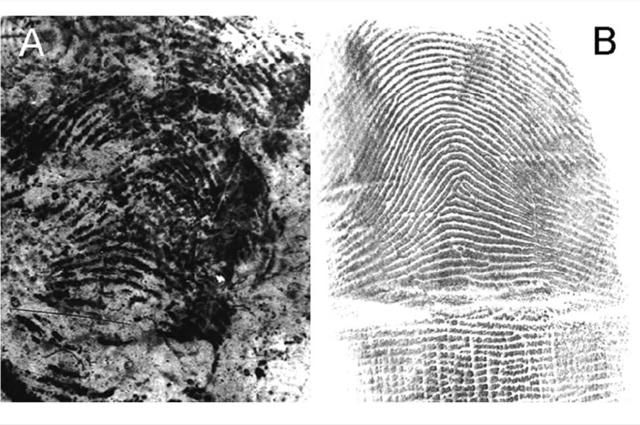
These striking achievements and high statistical figures clearly demonstrate the power of technology in fighting crime. However, the reality that no system can be completely flawless is also evidenced by certain critical cases in the history of biometric technologies. Exceptional technical and human errors during periods when systems were assumed to operate flawlessly have radically changed the approach to these technologies. One of the clearest and most educational examples of this is the historical case known in the literature as the ‘Mayfield Affair’.
A Historical Example: The Mayfield Case
Occurring in 2004, the Mayfield case is regarded as a significant historical example demonstrating that biometric technologies can be prone to errors under certain conditions. Following the terrorist attacks in Madrid, Spain, a fingerprint retrieved from the scene led to a false match via the FBI’s AFIS (Automated Fingerprint Identification System), which was initially verified by examiners. However, subsequent independent analyses revealed that the fingerprint actually belonged to someone else. Although this incident highlighted the limitations of early biometric systems, it should be viewed as an isolated error rather than a reason to question the overall validity of the technology. The Mayfield case serves as an example of a temporary error showing that both algorithms and human factors play a role in interpreting biometric data. Rather than undermining the power of biometric technologies, this case highlights the vital importance of supporting these systems with multi-layered verification processes.
Today, biometric systems have become far more reliable thanks to continuous improvements and advancing technologies. Algorithmic accuracy has significantly improved, and systems have been engineered to minimize errors more effectively. Consequently, when properly deployed, biometric systems in security and forensic applications are highly reliable and efficient. Subjecting this field to continuous auditing and improvement processes ensures that the security and accuracy of biometric technologies are maximized.
Data Security and Privacy in Crime Prevention and Security
Because biometric data comprises a person’s most private and unalterable characteristics, securing it is of utmost criticality. The unauthorized acquisition of this data by malicious actors can lead to personal rights violations and severe security breaches. For instance, the 2015 UCLA biometric data breach, which resulted in the fingerprint data of millions of users falling into the hands of cybercriminals, underscores the extreme care required in protecting biometric data. This incident once again highlights the absolute necessity of implementing both technical and legal safeguards in biometric data processing. Regulations such as the European Union’s GDPR and Turkey’s KVKK protect user privacy by imposing strict rules on the collection, processing, and storage of biometric data.
At this point, BioAffix offers a proactive security model that goes beyond the expectations of legal regulations with its advanced security architecture. Unlike traditional methods, the system eliminates data leakage risks at the source by not storing sensitive biometric data directly on devices, servers, or network components. This innovative approach is powered by Biometrics-on-Card, the proprietary BioQR technology, and the BioAffix Vision Platform that orchestrates it all. Thanks to Biometrics-on-Card and BioQR, users’ biometric templates are stored and carried within a secure, encrypted QR code structure rather than on the device itself. Consequently, authentication is performed instantly without storing data centrally or on edge devices; it relies solely on user-owned smart credential solutions containing BioQR and biometric data, such as BioAffix NextBadge, or mobile and portable credential solutions like Apple Wallet, Google Wallet, and BioAffix BioQR Pass.
To maximize hardware security, BioAffix devices feature integrated HSM (Hardware Security Module) and TPM (Trusted Platform Module) chips. Thanks to this cryptographic modulation, even if an edge device is physically or digitally compromised, or completely dismantled, no intercepted data can be reconstructed into a meaningful form. Because cryptographic keys and data fragments are protected at the hardware level, they remain completely useless and unreadable to malicious third parties. Through this multi-layered architecture, BioAffix absolutely secures data privacy while transforming legal compliance from a corporate risk into a seamless process.
Conclusion
Biometric technologies are becoming increasingly critical in modern crime-fighting, serving both preventive and detective roles. By utilizing unique physical traits such as fingerprints, facial recognition, iris scanning, and palm vein scanning, these systems secure and streamline authentication, enabling the detection and prevention of unauthorized access. When implemented correctly and appropriately, these technologies bring to life the philosophy of “nowhere to hide, and every trace left behind!”—empowering security forces to respond to incidents with greater speed and absolute precision.
References
FBI Biometric Technology Report, 2023 https://www.fbi.gov/file-repository/cjis/2023-nics-operational-report.pdf
INTERPOL Crime Statistics, 2022 https://www.interpol.int/content/download/18350/file/Global Crime Trend Summary Report EN.pdf
European GDPR – Biometric Data Regulations https://www.edpb.europa.eu/our-work-tools/our-documents/topic/biometrics_en
Türkiye KVKK – Kişisel Veri Güvenliği https://www.kvkk.gov.tr/
BioAffix Resmi Web Sitesi https://bioaffix.com/tr/
BioAffix Gate Vision https://bioaffix.com/access-control/bioaffix-gate-vision/security-features/
Madrid Bombings FBI Report, 2006 https://oig.justice.gov/semiannual/0605/fbi.htm
UCLA Biometric Data Breach Report, 2015 https://www.uclahealth.org/news/release/ucla-health-victim-of-a-criminal-cyber-attack-2472
Subscribe to the BioAffix Newsletter
You can stay informed about the latest developments by subscribing to the BioAffix e-newsletter, published quarterly.


